

"Why Indian Manufacturers Fail at B2B Sales (It's Not Your Product or Price)"

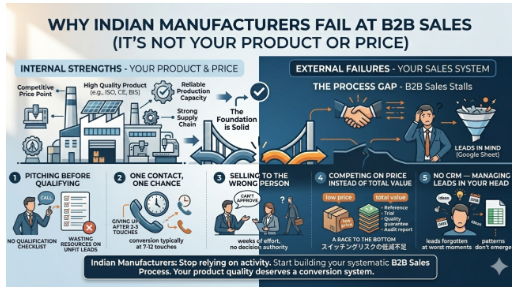
WHY INDIAN MANUFACTURERS FAIL AT B2B SALES (IT'S NOT YOUR PRODUCT OR PRICE)
A manufacturer from Ludhiana called me frustrated last year. Good product. Competitive pricing. ISO certified. Factory fully operational.
But B2B sales?
Flat for three years.
Same four distributors.
Same monthly numbers.
Zero new channels.
"We've tried everything," he said. "Called hundreds of businesses. Sent samples. Nobody converts."
I asked him one question: "Walk me through exactly what happens after you send the sample."
Silence.
There was no process. There was activity — calls, samples, visits — but no system.
No follow-up sequence.
No qualification criteria.
No conversion framework.
Facts
The product wasn't the problem.
The price wasn't the problem.
The sales process was the problem.
━━━━━━━━━━━━━━━━━━━━━━━━━━━━━━━━━━━━━━━━━
THE REAL REASON B2B SALES STALLS FOR MANUFACTURERS
Most manufacturers approach B2B sales the way they approach production: show up, do the work, expect results.
Manufacturing rewards consistency. B2B sales rewards systems.
These are fundamentally different.
In manufacturing, if you run the machine correctly, you get the output. Predictable. Repeatable.
In B2B sales, you can do everything "right" and still lose the deal. Because you're dealing with humans, budgets, internal politics, competing priorities, and timing.
Manufacturers who struggle with B2B sales are usually making one or more of five mistakes.
━━━━━━━━━━━━━━━━━━━━━━━━━━━━━━━━━━━━━━━━━
MISTAKE #1: PITCHING BEFORE QUALIFYING
Most manufacturers contact every business that could theoretically buy their product.
Textile manufacturer? Contact every clothing brand in India.
Food processor? Call every restaurant chain and retail store.
This feels productive. It's actually exhausting and ineffective.
Not every potential buyer is a good fit right now.
Some have locked-in suppliers.
Some have budget cycles that don't align.
Some are too small.
Some are too large and will demand terms you can't meet.
Sending samples to unqualified leads is one of the most expensive mistakes in B2B sales.
You spend money on samples
Tme on follow-up, and
Emotional energy on prospects who were never going to convert.
The fix is a qualification checklist before you invest in any prospect:
→ Do they currently buy what you make? (Or are they starting from scratch, which takes 3x longer)
→ What's their approximate monthly volume? (Is it worth your minimum?)
→ Who makes the purchasing decision? (Are you talking to that person?)
→ When did they last evaluate suppliers? (If six months ago, timing is bad)
→ What's their payment track record? (Ask for references before celebrating the order)
Five questions. Answered before you send a single sample.
This alone cuts wasted effort by 60%.
━━━━━━━━━━━━━━━━━━━━━━━━━━━━━━━━━━━━━━━━━
MISTAKE #2: ONE CONTACT, ONE CHANCE
Manufacturers treat B2B like a one-shot conversation. Call. Pitch. Wait. Either they buy or they don't.
B2B purchasing decisions at any meaningful volume involve multiple people, multiple conversations, and multiple touchpoints before a decision is made.
Research consistently shows B2B decisions require 7-12 touchpoints on average before conversion. Most manufacturers give up after 2-3.
The manufacturer I mentioned? He was following up once after sending samples. If there was no response, he marked the lead as "not interested" and moved on.
He was abandoning leads at touchpoint 2. Conversion typically happens at touchpoint 7.
A proper follow-up sequence looks like this:
Day 1: Send sample with specific note about why it fits their business
Day 3: Confirmation call — did sample arrive, any initial impressions?
Day 7: WhatsApp follow-up — share relevant case study or specification
Day 14: Call to discuss feedback — address specific concerns
Day 21: Revised proposal if needed, or trial order suggestion
Day 35: Check-in — has their situation changed?
Day 60: Final outreach — offer small trial order with flexible terms
Seven touchpoints. Most manufacturers do two.
━━━━━━━━━━━━━━━━━━━━━━━━━━━━━━━━━━━━━━━━━
MISTAKE #3: SELLING TO THE WRONG PERSON
This is the silent killer of B2B pipelines.
Manufacturers often build relationships with whoever picks up the phone — the purchase manager, the store keeper, the operations executive.
These people can block a deal. They cannot approve one.
The decision maker for a new supplier relationship is almost always the business owner, MD, or CFO — depending on the order value.
Weeks of effort building rapport with a purchase manager, only to have the owner say "we're happy with our current supplier" — without ever being approached directly.
How to identify and reach the actual decision maker:
→ Ask directly: "Who typically approves new supplier relationships at your company?"
→ LinkedIn search the company, find the owner or director
→ In your first call, establish budget authority: "Are you the right person to evaluate this, or should I connect with someone else?"
→ Don't be afraid to escalate — "I'd love to briefly share this with [owner name] as well, as it involves a significant cost saving"
This feels uncomfortable. It works.
━━━━━━━━━━━━━━━━━━━━━━━━━━━━━━━━━━━━━━━━━
MISTAKE #4: COMPETING ON PRICE INSTEAD OF TOTAL VALUE
When a manufacturer doesn't know what else to offer, they drop price. This is a race to the bottom. Someone cheaper always exists.
B2B buyers are not purely price-driven. They're risk-driven.
Switching suppliers is risky.
There are quality unknowns, reliability concerns
Compliance questions
Delivery uncertainties
The existing supplier — even at a higher price — is a known quantity.
To win a new buyer away from an existing supplier, you must make switching feel safe, not just cheap.
How to reduce switching risk perception:
→ Offer a small trial order at zero commitment ("try 500 units, if quality meets expectations we proceed")
→ Provide verifiable references from similar businesses
→ Offer quality guarantees with clear replacement terms
→ Start with a product they can test without disrupting their main supply chain
→ Show certifications, factory audit reports, compliance documentation upfront
Price can be a tiebreaker. It should never be your primary pitch.
The manufacturer who wins on value holds margins. The one who wins on price gets squeezed every renewal.
━━━━━━━━━━━━━━━━━━━━━━━━━━━━━━━━━━━━━━━━━
MISTAKE #5: NO CRM — MANAGING LEADS IN YOUR HEAD
Fifty prospects in your head. WhatsApp messages scattered across dozens of chats. Sample dispatches noted in a diary. Follow-up dates remembered until they're forgotten.
This is how manufacturers "manage" their B2B pipeline. It doesn't scale. And it means your best leads get forgotten at the worst moments.
A basic CRM doesn't require expensive software. A Google Sheet with these columns is enough:
Company
Contact Name
Phone
Product Interest
Sample Sent
Last Contact Date
Next Action
Status
Notes
Update it every day. Review it every Monday morning.
When you can see your entire pipeline in one view, patterns emerge. You notice leads going cold before it's too late. You catch follow-ups that slipped. You prioritize based on where deals actually are, not where you hope they are.
The manufacturer I mentioned? Within six weeks of implementing this simple system — same products, same pricing, same market — he converted three new distributors
Nothing changed except the process.
━━━━━━━━━━━━━━━━━━━━━━━━━━━━━━━━━━━━━━━━━
WHAT SYSTEMATIC B2B SALES ACTUALLY LOOKS LIKE
Month 1: Build qualified prospect list (100-200 businesses, not 1,000 random contacts)
Month 2: First contact wave — calls, visits, introductory meetings. Send samples only to qualified prospects.
Month 3: Follow-up sequence begins. Seven touches per prospect over 60 days. Track every interaction.
Month 4: First conversions typically arrive. These are prospects who were in evaluation mode and needed consistent, professional follow-through.
Month 5-6: Referrals from new clients. Your best B2B leads come from satisfied B2B customers.
This is not glamorous. It's not a hack or a shortcut. It's a repeatable process that works every time it's executed properly.
━━━━━━━━━━━━━━━━━━━━━━━━━━━━━━━━━━━━━━━━━
THE UNCOMFORTABLE TRUTH
Most manufacturers have better products than their B2B sales results suggest. The gap between product quality and revenue is almost always a process gap, not a quality gap.
You can close that gap. But it requires treating B2B sales as a system to be built — not a task to be done whenever there's free time between production runs.
The businesses winning at B2B aren't necessarily making the best products. They're making good products and selling them systematically.
What's been your biggest B2B sales challenge? Drop it in the comments — I read and respond to every one.
Comments