

Amazon vs Your Own Website: Which Should Indian Manufacturers Prioritize? (Real Math Inside)

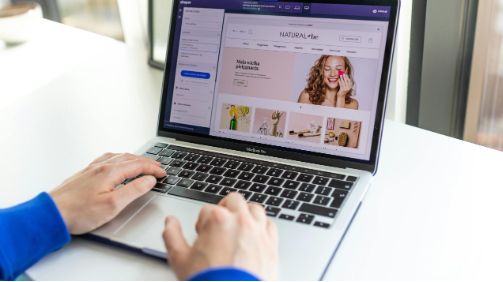
"Should I sell on Amazon or build my own website?"
I get this question from manufacturers 3-4 times every week. Last month, a furniture manufacturer asked me the same thing. "Bhupinder, we have ₹2 lakhs to invest in going online. Should we launch on Amazon or build our own D2C website?"
I showed him the math.
His decision changed in 10 minutes.
Not because one option is universally better—but because the right answer depends on where you are RIGHT NOW.
Let me break down the exact framework I used, with real numbers, so you can make this decision for your business.
The Question Everyone Asks Wrong
Here's how manufacturers typically frame this: "Amazon OR Website—which one should I choose?"
That's the wrong question.
The right question is:
"Based on my current revenue, resources, and goals—which should I prioritize FIRST?"
Because here's the truth most consultants won't tell you: Eventually, you need both.
But the sequence matters. A LOT.
Choose wrong, and you waste ₹2-5 lakhs and 6 months with nothing to show.
Choose right, and you build sustainable, profitable growth.
The Framework: Revenue Stages
After working with 20+ manufacturers on this decision, I've identified 3 revenue stages where the answer changes completely:
Stage 1: ₹0-50 Lakhs Annual Revenue
Priority: Amazon/Flipkart (marketplaces FIRST)
Invest in website: Later (after hitting ₹50L on marketplaces)
Stage 2: ₹50L-2Cr Annual Revenue
Priority: Both (marketplaces + basic website)
Focus: 70% marketplace, 30% website
Stage 3: ₹2Cr+ Annual Revenue
Priority: Both equally
Focus: 50% marketplace, 50% D2C website + brand building
Let me show you why with real numbers.
Stage 1: ₹0-50 Lakhs Revenue → Amazon FIRST
Why Marketplaces Win at This Stage:
Reason 1: Immediate Traffic Access
Amazon/Flipkart:
Day 1: Your product is visible to 50+ crore active users
Month 1: 500-2,000 impressions (if listing is optimized)
Month 3: Regular orders flowing
Your Website:
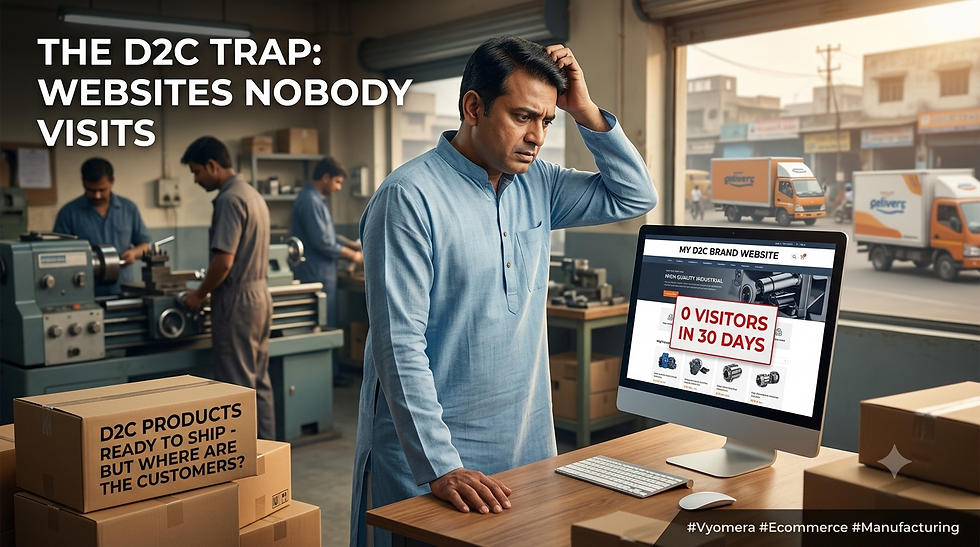
Day 1: Zero visitors (nobody knows you exist)
Month 1: 20-50 visitors (if you're running ads)
Month 3: Still building traffic
Example - Furniture Manufacturer:
If he launched on Amazon:
Month 1: 1,200 impressions, 15 orders = ₹67,000 revenue
Month 3: 4,500 impressions, 52 orders = ₹2,34,000 revenue
Month 6: Established presence, consistent ₹3-4L monthly
If he built website first:
Month 1: ₹25,000 in Google Ads → 200 visitors → 2 orders = ₹8,900 revenue
Month 3: ₹75,000 spent on ads → Still building brand awareness
Month 6: Maybe breaking even, still burning cash
Winner at Stage 1: Amazon (by a landslide)
Reason 2: Trust is Built-In
Customer Psychology:
Amazon/Flipkart:
"It's on Amazon" = Instant credibility
Return policy = Amazon handles
Payment security = Amazon guarantees
Delivery trust = Amazon/Flipkart logistics
Your Website (Unknown Brand):
"Is this site legit?" = Customer hesitation
"What's the return policy?" = Customer doubts
"Will they steal my card info?" = Abandonment
"Will the product actually arrive?" = Order anxiety
Reality Check:
Our furniture manufacturer had ZERO brand recognition.
Website conversion rate expectations:
Established brand website: 2-3%
Unknown brand website: 0.3-0.8%
Amazon conversion rate:
Optimized listing: 8-15%
That's 10-50x better conversion on Amazon vs your own unknown website.
Reason 3: Lower Setup Investment
Let's compare actual costs:
Amazon/Flipkart Launch:
Setup costs:
Professional product photography: ₹12,000
GST registration (if not done): ₹5,000
Amazon seller account (annual): ₹3,500
Listing optimization (DIY or consultant): ₹15,000
Initial inventory for FBA: ₹40,000
Total initial investment: ₹75,500
Monthly costs:
Amazon referral fee: 8-15% of sales (only when you sell)
FBA fees: ₹30-80 per unit (only when you sell)
Ads (optional initially): ₹5,000-10,000/month
ROI: Typically positive by Month 2-3
Professional D2C Website:
Setup costs:
Professional website development: ₹60,000-₹1,20,000
Product photography: ₹12,000
Domain + hosting: ₹8,000/year
Payment gateway setup: ₹5,000
SSL certificate: ₹3,000
Total initial investment: ₹88,000-₹1,48,000
Monthly costs (to get traffic):
Google Ads: ₹20,000-40,000/month (minimum)
Facebook/Instagram ads: ₹15,000-25,000/month
SEO efforts: ₹10,000-20,000/month
Total monthly burn: ₹45,000-85,000
ROI: Typically 8-12 months to break even (if lucky)
Math for ₹2 Lakh Budget:
Option A - Amazon First:
Setup: ₹75,500
Remaining: ₹1,24,500 for inventory + ads
Result: Profitable by Month 2-3, growing sustainably
Option B - Website First:
Setup: ₹1,20,000 (high-quality website)
Remaining: ₹80,000
Burn ₹50,000/month on ads = Money runs out in 6-8 weeks
Result: Scrambling for more capital before seeing results
Clear winner at Stage 1: Amazon
Reason 4: Learn Customer Behavior with Real Money
Amazon teaches you:
Which products actually sell (not what you think will sell)
What price points convert
Which features customers care about (from reviews)
What keywords customers search for
Seasonal demand patterns
All this learning happens while you're MAKING money.
Website at Stage 1 teaches you:
How to burn through ad budget
That driving traffic is expensive
That conversion is hard without trust
All this learning happens while you're LOSING money.
Stage 2: ₹50L-2Cr Revenue → Both (Marketplace Priority)
Once you're doing ₹50 lakhs+ annually on marketplaces, it's time to add a website.
Why add website at this stage?
Reason 1: Brand Control
Amazon owns the customer relationship.
You're a vendor on their platform.
Your website = You own the customer data, relationship, brand experience.
Reason 2: Margin Improvement
Amazon/Flipkart economics:
Selling price: ₹1,000
Referral fee (15%): -₹150
FBA fee: -₹60
Ads (15% ACOS): -₹150
Net to you: ₹640 (64% margin)
Your D2C website economics:
Selling price: ₹1,000
Payment gateway (2%): -₹20
Shipping: -₹50
Ads (Google/FB, 20% CAC): -₹200
Net to you: ₹730 (73% margin)
9% margin improvement = ₹90 extra per ₹1,000 sale
At ₹50L revenue, that's ₹4.5L extra profit annually.
Worth building a website for.
Reason 3: Amazon Risk Diversification
Real stories I've seen:
Manufacturer A (Kitchenware):
100% revenue from Amazon
Account suspended (fake review accusation)
Revenue: ₹8L/month → ₹0 overnight
Took 45 days to resolve
Lost: ₹3.6 crore in sales
Manufacturer B (Apparel):
60% Amazon, 40% own website
Same issue happened
Revenue dropped 60% but didn't die
Website kept business alive during resolution
Lesson: Never put all eggs in Amazon basket.
Stage 3: ₹2Cr+ Revenue → Equal Focus
At ₹2 crore+ revenue, you're no longer a startup.
You're an established business.
Now the game changes:
Focus Shifts to Brand Building
Marketplace: Acquisition channel (new customers)
Website: Brand experience + retention (repeat customers)
Resource Allocation:
Team:
Marketplace manager: Optimize listings, ads, inventory
Website team: Content, SEO, email marketing, retention
Budget:
50% marketplace ads (customer acquisition)
30% website/brand building (SEO, content, social)
20% retention (email, loyalty programs)
The Flywheel:
Customer discovers you on Amazon
Buys first time (marketplace economics)
You follow up via email/SMS (collected from order)
Bring them to website for repeat purchase
Better margins on repeat (no acquisition cost)
This is how ₹2Cr businesses become ₹10Cr businesses.
The Decision Framework (Use This)
Ask yourself these 4 questions:
Question 1: What's Your Current Revenue?
₹0-50L → Amazon FIRST
₹50L-2Cr → Amazon + Basic website
₹2Cr+ → Both equally
Question 2: What's Your Available Budget?
Under ₹1 lakh → Amazon only
₹1-3 lakhs → Amazon first, website later
₹3 lakhs+ → Both (but marketplace priority)
Question 3: How Soon Do You Need Revenue?
Need revenue in 2-3 months → Amazon
Can wait 8-12 months → Website
Long-term building (1-2 years) → Both
Question 4: Do You Have a Known Brand?
No brand recognition → Amazon FIRST
Some brand awareness → Both
Strong brand → Website priority (then marketplaces)
Real Case Study: The Furniture Manufacturer
Remember our furniture manufacturer with ₹2 lakh budget?
His Situation:
Current revenue: ₹12 lakhs/year (offline B2B)
Budget: ₹2 lakhs
Need: Revenue in 3-4 months
Brand: Zero online presence
His Initial Plan: Build beautiful ₹1.5L website, spend ₹50k on ads.
After Seeing the Framework:
Phase 1 (Month 1-6): Amazon Focus
Investment: ₹75,000 setup
Remaining ₹1.25L: Inventory + ads
Target: ₹3-5L monthly revenue by Month 6
Phase 2 (Month 7-12): Add Basic Website
Investment: ₹40,000 (Shopify/WooCommerce basic site)
Purpose: Brand presence, collect emails
No heavy ad spend yet
Direct customers from Amazon to website for future purchases
Phase 3 (Month 13-18): Scale Website
By now: ₹5-8L monthly on Amazon
Invest: ₹1.5L in professional website upgrade
SEO: ₹15k/month
Start: Content marketing, email campaigns
Target: 30% revenue from website (better margins)
His Result (6 Months In):
Amazon revenue: ₹4.2L/month (growing)
Website: Basic Shopify site live (collecting emails)
Total revenue: ₹4.2L online + ₹1L offline = ₹5.2L/month
Business transformed
If he had built website first:
Burned through ₹2L in 3 months
Maybe ₹40-50k revenue
Would have given up or needed more capital
No transformation
The right sequence changed everything.
Common Objections (Answered)
"But Amazon takes 15-20% commission! That's too high!"
Reality check:
Your own website costs:
Payment gateway: 2%
Shipping: 5-7%
Customer acquisition (ads): 20-30%
Website maintenance: 2-3%
Returns/replacements: 3-5%
Total: 32-47%
Amazon's 15-20% commission covers:
Traffic (₹0 from you)
Trust (built-in)
Payment processing
Customer service
Logistics (FBA)
Amazon's 15-20% is often CHEAPER than acquiring customers yourself.
"I want to own my customer data!"
You should. But:
Month 1 on Amazon:
20 orders × customer emails collected = 20 emails
Start email marketing
Bring them to your website for repeat purchases
Month 1 on unknown website:
₹30k in ads → 200 visitors → 2 orders = 2 emails
No meaningful data yet
You'll own MORE customer data faster by starting on Amazon.
"My competitor has a beautiful website and no Amazon presence!"
Questions to ask:
What's their revenue? (You don't know)
Are they profitable? (You don't know)
How much are they spending on ads? (You don't know)
How long did it take them to get there? (You don't know)
What you DO know:
Their beautiful website took ₹5-10 lakhs to build and 12-18 months to gain traction.
Can you afford that timeline and investment?
If yes, great—build website first. If no, start with marketplaces.
"Won't I become dependent on Amazon?"
Yes, if you ONLY do Amazon.
No, if you follow the framework:
Start on Amazon (leverage their traffic)
Build revenue (₹50L+)
Add website (own customer relationship)
Diversify (60% marketplace, 40% website)
Keep growing both
Amazon is a channel, not a strategy. Use it to bootstrap, then diversify.
The Bottom Line
Amazon vs Website isn't either/or. It's "which first, then both."
The sequence depends on:
Your current revenue
Available budget
Timeline to profitability
Brand recognition
For 80% of manufacturers: Start with Amazon/Flipkart.
Get to ₹50L+ revenue. Then add website.
Build brand, own customers, improve margins. Eventually, 50/50 split.
Marketplaces for acquisition, website for retention. That's how you build a real, sustainable online business.
Not by choosing one over the other—but by sequencing them right.
Where are you in this journey? What's holding you back from taking the first step?
Share in comments. Let's discuss your specific situation.
Need help deciding your channel strategy?
Book a free Clarity Call 📅 calendly.com/hellovyomera/claritycall
📱 OR WhatsApp +91 98 15 15 68 03
Know more about us https://linktr.ee/vyomera
I'll review your business, revenue, budget—and show you exactly which channel to prioritize first.
No generic advice. Just your specific roadmap.
Comments