

"ONDC vs Amazon vs Flipkart: The Platform Nobody Is Talking About (But Should Be)"


Every manufacturer I speak with asks the same question. "Should we be on Amazon or Flipkart?" It's a good question. But increasingly, it's the wrong starting point.
Because in 2025-2026, there's a third option that most manufacturers haven't seriously evaluated — one that could fundamentally change their e-commerce economics.
ONDC. Open Network for Digital Commerce.
Not a marketplace. An open protocol. And the distinction matters enormously.
━━━━━━━━━━━━━━━━━━━━━━━━━━━━━━━━━━━━━━━━━
FIRST: THE HONEST PICTURE OF AMAZON AND FLIPKART
Before talking about ONDC, let's be clear about what Amazon and Flipkart actually are for manufacturers.
Amazon India — The Reality
Amazon is the gold standard for product discoverability. If someone searches for a product category in India, Amazon typically appears in the top three results.
What you get: Massive customer trust, Prime infrastructure, global brand recognition, sophisticated advertising platform, Brand Registry protection.
What it costs you: 8-18% referral fee depending on category, FBA fulfillment fees, storage fees, mandatory discounts during sale events, increasing PPC competition driving up ad costs year on year.
The brutal math: A product selling at ₹1,000 on Amazon often generates ₹600-700 in actual revenue after all fees. That's before your production cost, packaging, and logistics.
Amazon is excellent for brand building and volume. Margin-building requires very careful management.
Flipkart — The Reality
Flipkart dominates in categories Amazon underserves: regional language markets, Tier 2-3 city penetration, fashion and lifestyle, grocery through Flipkart Minutes.
What you get: Strong regional reach, less competition in many categories versus Amazon, better category management support for local brands.
What it costs you: Similar fee structure to Amazon, less sophisticated advertising platform, QC requirements that can delay listing approval, fashion-specific challenges around returns.
Flipkart often makes more sense than Amazon for certain product categories — apparel, regional food products, home textiles. Many manufacturers default to Amazon without evaluating whether Flipkart actually fits their category better.
━━━━━━━━━━━━━━━━━━━━━━━━━━━━━━━━━━━━━━━━━
NOW: WHAT ONDC ACTUALLY IS
ONDC is not a marketplace. This is the most important thing to understand.
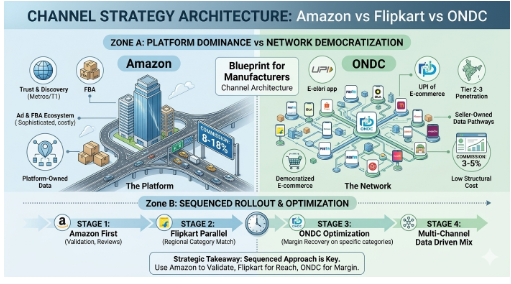
Amazon is a platform. You sell on Amazon. Amazon owns the customer relationship, the data, the search algorithm, the pricing decisions during sales, and the trust.
ONDC is an open protocol — think of it like the UPI of e-commerce. Multiple buyer apps and seller apps connect through one shared network. The customer uses whatever app they prefer (Paytm, Meesho, Ola, dozens of others). The seller lists once and reaches all of them.
Launched by the Government of India, ONDC's goal is to democratize e-commerce — specifically to give small manufacturers and sellers an alternative to the duopoly of Amazon and Flipkart.
━━━━━━━━━━━━━━━━━━━━━━━━━━━━━━━━━━━━━━━━━
THE THREE DIFFERENCES THAT MATTER FOR MANUFACTURERS
Difference #1: Commission Structure
Amazon and Flipkart: 8-18% referral fee, plus fulfillment, plus advertising.
ONDC: Commission varies by network participant, but typically 3-5% for many categories. Some seller apps charge differently, but the structural cost is significantly lower.
For a manufacturer doing ₹10 lakh monthly volume, the fee difference between ONDC and Amazon could be ₹50,000-1,00,000 per month.
That is not a small number.
Difference #2: Customer Data Ownership
On Amazon, the customer is Amazon's customer. You cannot contact them, market to them directly, or build a direct relationship. Your reviews live on Amazon's platform, not yours.
On ONDC, depending on which seller app you use, the data architecture is different. The network is designed to enable direct relationships between buyers and sellers over time.
For manufacturers thinking about building a brand — not just moving inventory — this distinction matters enormously for five-year strategy.
Difference #3: Geographic Reach Without Premium
Amazon and Flipkart's logistics infrastructure is excellent in metros and Tier 1 cities. Tier 2-3 becomes more expensive and less reliable.
ONDC is explicitly designed for Bharat — the 800 million Indians outside metros. Local buyer apps in smaller cities connect to the same seller network.
For manufacturers making products consumed in smaller cities and towns, ONDC reach could exceed Amazon reach within 3-5 years.
━━━━━━━━━━━━━━━━━━━━━━━━━━━━━━━━━━━━━━━━━
THE HONEST LIMITATIONS OF ONDC RIGHT NOW
Transparency matters here. ONDC has real limitations in 2026.
Volume is still low. Amazon and Flipkart drive vastly more transaction volume than ONDC currently. If you're purely focused on sales in the next six months, Amazon will outperform ONDC.
Buyer awareness is developing. Most Indian online shoppers haven't consciously used ONDC. They're using apps that happen to be ONDC-connected — Paytm, Ola, others — but brand recognition of "ONDC" itself is limited.
Seller experience varies. The quality of seller apps on ONDC varies significantly. Some offer excellent dashboards and support. Others are still developing. Choosing the right seller app matters.
Category depth is uneven. Electronics and high-value products have less buyer confidence on ONDC currently versus Amazon. Basic FMCG, food, and essential categories are performing better.
━━━━━━━━━━━━━━━━━━━━━━━━━━━━━━━━━━━━━━━━━
THE STRATEGIC FRAMEWORK: HOW TO THINK ABOUT ALL THREE
This is not an either/or decision. The right answer for most manufacturers is a sequenced approach.
Stage 1: Amazon First (Months 1-3)
Launch on Amazon. Build your proof of concept. Get your first 50-100 reviews. Validate that online customers want your product at your price point. Learn what questions customers ask, what concerns they have, what they love.
Amazon's traffic volume means you get market feedback faster than anywhere else.
Stage 2: Flipkart Parallel (Month 2-4)
If your category has strong Flipkart presence — apparel, home textiles, regional products, lifestyle — add Flipkart within the first few months. The listing work overlaps significantly with Amazon. Incremental effort is low.
Stage 3: ONDC as Margin Optimization (Month 4-6)
Once you understand your product-market fit through Amazon and Flipkart, explore ONDC for categories where the lower commission structure significantly improves economics.
For commodity-adjacent products with thin margins, ONDC's fee structure could be the difference between a viable online channel and one that barely breaks even.
Stage 4: Evaluate Based on Category Performance (Month 6+)
By month six, you'll have real data.
Which platform drives volume?
Which drives margin?
Which customer profile buys on each platform?
Build your channel mix based on your data, not assumptions.
━━━━━━━━━━━━━━━━━━━━━━━━━━━━━━━━━━━━━━━━━
THE THREE-YEAR VIEW
Amazon and Flipkart will not disappear. They will remain dominant for the foreseeable future.
But their commission structures are unlikely to decrease.
Their advertising costs will continue rising as more sellers compete for the same visibility.
Their terms with sellers have consistently moved in their favor over time.
ONDC, backed by government infrastructure and policy intent, is likely to grow significantly. The question is not whether it will matter — it will — but when it will matter enough to prioritize.
Manufacturers who understand ONDC now, set up their presence early, and learn the platform mechanics before it scales will have a significant advantage over those who discover it three years from now.
First-mover advantage in online channels is real. The brands who built strong Amazon presence in 2018-2020 are nearly impossible to displace now through reviews, ranking, and brand recognition alone.
The ONDC window is open. It won't stay open forever.
━━━━━━━━━━━━━━━━━━━━━━━━━━━━━━━━━━━━━━━━━
The question isn't Amazon or Flipkart or ONDC.
The question is: which platform, for which product, at which stage of your growth — and what does the data say after 90 days?
Build a multi-platform strategy.
Start with Amazon for validation.
Add Flipkart for parallel reach.
Explore ONDC for margin optimization.
Don't let anyone tell you there's one right answer. The right answer depends entirely on your...
Category
Margins
Customer
Timeline.
Which platform has worked best for your business — and which surprised you? Drop it in comments.
Comments