

WHY INDIAN MANUFACTURERS ARE LEAVING ₹10 LAKH ON THE TABLE EVERY MONTH (AND DON'T EVEN KNOW IT)


Last week I visited a manufacturer.
Solid business. 18 years in operation. Good products. Decent B2B relationships. Revenue around ₹2 crore annually.
I asked one question: "Are you selling on Amazon?" "No," he said. "We sell to distributors. That's how it's always worked."
I pulled out my phone and searched his product category on Amazon. Top seller: 4,200 reviews. ₹1,850 per unit. Estimated 200+ units/month. His landed cost for the same product: ₹680.
He was sitting on a ₹2.3 lakh/month profit opportunity. On one product. Selling to no one. This is not unusual. This is the norm.
━━━━━━━━━━━━━━━━━━━━━━━━━━━━━━━━━━━━━━━━━
THE REAL COST OF STICKING TO "HOW IT'S ALWAYS WORKED"
Indian manufacturing is extraordinary. We make products that the world wants — textiles, home goods, personal care, food products, industrial supplies, craft materials. But most manufacturers are selling like it's 2005.
The model: Produce → Sell to distributor → Distributor sells to retailer → Retailer sells to customer.
At each step, someone else captures margin. The manufacturer — the person who actually created the product — often earns the least per unit.
Meanwhile, the end customer is paying ₹1,800 for something that cost ₹600 to make. The gap between what manufacturers earn and what customers pay is where ₹10 lakh monthly opportunities disappear.
━━━━━━━━━━━━━━━━━━━━━━━━━━━━━━━━━━━━━━━━━
THE FIVE GAPS I SEE REPEATEDLY
In the past few months, I've spoken with dozens of Indian manufacturers. The same five gaps appear again and again.
GAP #1: NO DIRECT RETAIL CHANNEL
Most manufacturers have never sold directly to the end customer. Everything goes through middlemen — distributors, wholesalers, trading companies.
The problem isn't that B2B is bad. B2B is great for volume and cash flow predictability.
The problem is having ONLY B2B.
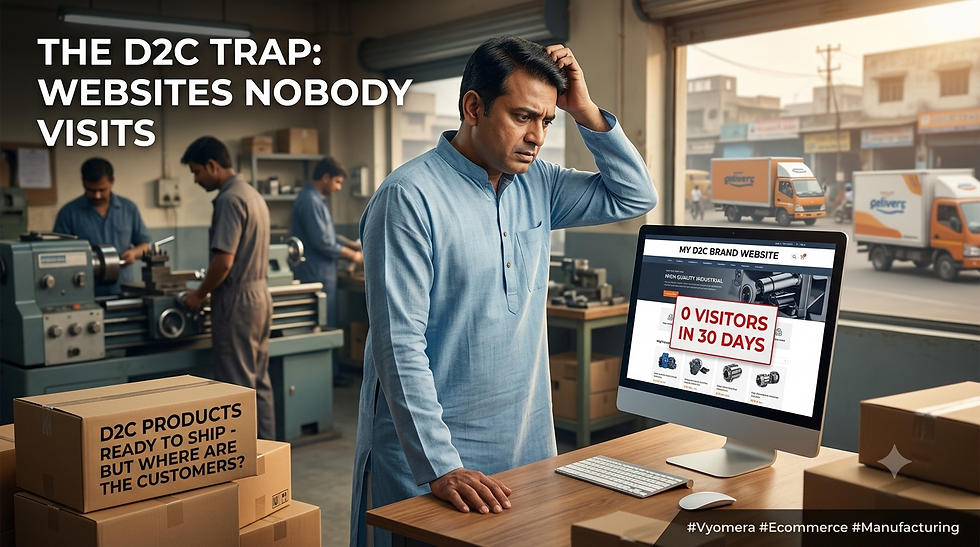
When a manufacturer adds even one direct retail channel — Amazon, Flipkart, their own website — the economics change completely.
I worked with a product that sold to distributors at ₹420/unit. The same product on Amazon sold at ₹1,299/unit. Same product. Same manufacturer. Three times the revenue per unit.
The distributor was capturing margin the manufacturer didn't even know existed.
GAP #2: SOURCING COSTS THAT HAVEN'T BEEN REVIEWED IN YEARS
This surprises people the most.
Manufacturers often have supplier relationships that are 5-10 years old. The pricing was negotiated when MOQs were different, when the business was smaller, when the market was different.
Nobody went back and renegotiated.
I reviewed sourcing for one business and found they were paying 38% above current market rate for their primary raw material. Not because the supplier was cheating them — but because nobody had asked for updated pricing in four years.
Four years of overpaying. On every single unit. Every single month. When we renegotiated, the annual saving was ₹14 lakh. On one raw material.
The sourcing review took three weeks.
GAP #3: PRODUCT LISTINGS THAT DON'T CONVERT
Some manufacturers ARE on Amazon and Flipkart.
But they launched the way most people launch: Upload a few photos. Write a basic description. Set a price. Hope for sales. Amazon doesn't reward hope. It rewards optimization.
Poor title = invisible in search.
Bad images = high bounce rate.
Feature-focused bullets = low conversion.
No A+ Content = weak trust signals.
No Brand Registry = vulnerable to hijackers.
I've seen products sitting at 20 units/month that jumped to 150 units/month after proper optimization. Same product. Same price. Same category.
The difference was the listing.
GAP #4: AD SPEND WITHOUT STRATEGY
"We tried ads. They didn't work." I hear this constantly.
When I look at the campaigns, the pattern is always the same:
Auto campaigns running with no negative keywords.
Broad match keywords attracting irrelevant traffic.
Budget split equally across campaigns regardless of performance.
No ACoS targets.
No optimization cadence.
Money leaving the account every day. No system to evaluate what's working. Running ads without strategy isn't marketing. It's donation.
I managed ₹5 lakh monthly in ad spend. The difference between profitable and unprofitable wasn't the budget — it was the structure.
Same budget. Half the waste. Double the return.
GAP #5: ZERO B2B CHANNEL DEVELOPMENT
Here's the irony: manufacturers who are great at making things are often terrible at systematically finding buyers.
Their current B2B relationships came through personal connections, referrals, trade shows years ago. Nobody built a repeatable system for finding new distributors, institutional buyers, or export customers.
I spent two months doing structured B2B outreach. Visited 50+ potential partners. Made 200+ calls. Closed one solid retail partnership.
One partnership. Ongoing orders. Every month.
That's the difference between random B2B efforts and systematic channel development.
━━━━━━━━━━━━━━━━━━━━━━━━━━━━━━━━━━━━━━━━━
WHAT ₹10 LAKH/MONTH ACTUALLY LOOKS LIKE
Let me make this concrete.
A manufacturer doing ₹2 crore annual B2B revenue could realistically add:
Amazon/Flipkart launch (3-6 months to stabilize):
₹3-5 lakh/month additional revenue Margin: 40-55% (vs 15-25% B2B)
Sourcing optimization (one-time review):
₹1-2 lakh/month in cost savings Permanent. Every month. Forever.
Ad optimization (existing or new campaigns):
₹80,000-1.5 lakh/month in recovered ad waste Efficiency gain, not additional spend.
B2B channel expansion (systematic outreach):
₹1-2 lakh/month in new distributor orders Takes 3-4 months to build momentum.
Total additional monthly value: ₹6-10.5 lakh
This isn't theoretical. This is what systematic attention to each gap produces.
━━━━━━━━━━━━━━━━━━━━━━━━━━━━━━━━━━━━━━━━━
WHY MANUFACTURERS DON'T FIX THESE GAPS
I understand why these gaps exist.
Running a manufacturing business is genuinely difficult
Production. Quality control.
Raw material procurement.
Staff management.
Cash flow.
Compliance.
There is no spare time to
Audit Sourcing,
Optimize Amazon Listings
Restructure Ad Campaigns, and
Build B2B channels simultaneously.
So it doesn't happen.
Not because manufacturers don't know these gaps exist. But because fixing them is not the urgent thing. And the urgent things never stop coming.
This is how ₹10 lakh/month opportunities stay on the table for years.
Not through negligence. Through being too busy running the business to grow it.
━━━━━━━━━━━━━━━━━━━━━━━━━━━━━━━━━━━━━━━━━
THE QUESTION WORTH ASKING
That manufacturer I visited?
We talked for 45 minutes. By the end of the conversation, he could see three specific opportunities he hadn't considered.
He didn't need a massive overhaul. He needed someone to look at the business with fresh eyes and point to what was being missed.
Most manufacturers I speak with have the same experience.
The products are good.
The production capability is real.
The market demand exists.
The gap is almost never the product. It's the path from product to customer.
If you're a manufacturer, I'd ask one question:
When did someone last look at your business and tell you where the money is being left behind?
If the answer is "never" or "can't remember" — that's probably the most valuable conversation you could have this month.
━━━━━━━━━━━━━━━━━━━━━━━━━━━━━━━━━━━━━━━━━
DM me "AUDIT" and I'll do a free 20-minute review of your biggest gap — no pitch, just honest assessment.
Comments