

WHY YOUR FIRST HIRE AS A MANUFACTURER WILL EITHER FREE YOU OR DESTROY YOU

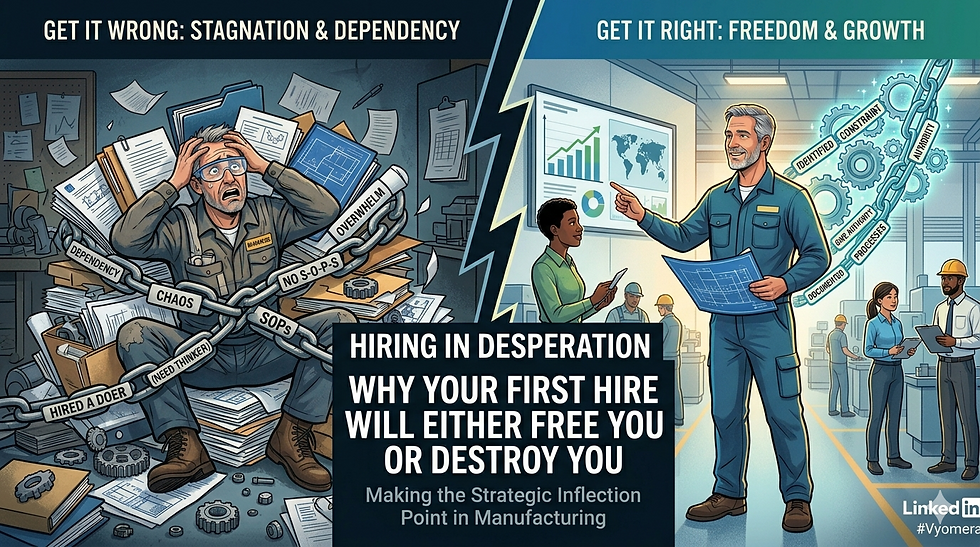
I've watched this play out more times than I can count.
A manufacturer reaches a point where they genuinely cannot handle everything alone..
Production is growing
Orders are coming in
Customers need attention
Operations need management
The owner is working 14 hours a day and still falling behind.

The obvious solution: hire someone.
So they hire. And what happens next determines whether the business enters a new phase of growth — or enters six months of chaos that sets everything back.
The first hire is not just an operational decision. It is a strategic inflection point.
Get it right and you create leverage — more gets done without requiring more of you..
Get it wrong and you create dependency — now you're managing a person on top of managing everything else, with all the original problems intact.
Most manufacturers get it wrong. Not because they're bad at hiring. Because nobody told them what the first hire decision actually involves.
━━━━━━━━━━━━━━━━━━━━━━━━━━━━━━━━━━━━━━━━━
WHY THE FIRST HIRE IS DIFFERENT FROM ALL OTHERS
Every subsequent hire you make will happen in a context where some systems exist. Someone already knows how things work. There's a template for onboarding. There's a culture, however informal. There are processes, however undocumented.
The first hire happens with none of this.
They arrive into a business where the owner is the system. Where knowledge lives entirely in one person's head. Where processes are habits, not documents. Where decisions get made based on experience nobody else has yet.
The first hire inherits this situation and must somehow function productively within it — while you continue handling everything you were handling before, plus teaching someone, plus managing their mistakes, plus adjusting to having another person in the business.
This is harder than most manufacturers anticipate. The first month with a new hire often feels worse than before they arrived — because you're doing everything you were doing before plus training someone. The ROI on the hire takes time to appear.
Manufacturers who don't understand this often panic at the four-week mark. "This isn't working." "They're not good enough." "It was easier without them."
Sometimes that's true. More often, it's the unavoidable transition cost of the first hire — which passes if you push through it.
━━━━━━━━━━━━━━━━━━━━━━━━━━━━━━━━━━━━━━━━━
THE WRONG FIRST HIRE: HOW IT DESTROYS YOU
The most common wrong first hire is the one made in desperation.
You're overwhelmed.
You need help immediately.
You hire whoever is available, affordable, and willing — without clarity about what role actually needs filling or what this person needs to be capable of.
This creates specific problems.
Problem 1: You hire a doer when you need a thinker — or vice versa
Some businesses at the first hire stage need someone to execute tasks the owner currently handles — production supervision, order processing, customer communication, accounts management. These are doer roles. They require reliability, attention to detail, and the ability to follow established processes.
Other businesses need someone who can think — who can take a problem and figure out a solution without being told every step. These are thinker roles. They require judgment, initiative, and the ability to handle ambiguity.
Hiring a doer for a thinker role produces someone who waits for instructions that never come clearly enough. Hiring a thinker for a doer role produces someone who keeps improving the process instead of executing it.
Most manufacturers hire without being clear which type they need. The result is frustration on both sides.
Problem 2: You hire to fill your time — not to free your time
This is the most common and most expensive mistake.
The owner is overwhelmed. They make a list of what they're doing. They hire someone to handle the bottom of the list — the tasks that feel most routine, most transferable, most easily explained.
But the bottom of the list is usually not what's consuming the most valuable owner time. It's the tasks that feel urgent and visible — but aren't actually the highest-leverage use of the owner's capacity.
The correct question before the first hire is not: "What am I doing that I can give to someone else?"
The correct question is: "What am I doing that only I can do — and what would I do with my time if everything else was handled?"
Your first hire should free you to do the things only you can do. If your first hire frees you to do more of the same things you're already doing, you've created capacity without creating leverage.
Problem 3: You hire without defining success
A new hire arrives.
There is no written job description.
There are no specific targets.
There is no defined measure of whether they're performing well.
After 60 days, you're unsatisfied but can't articulate why. They're confused about what's expected but don't know how to ask. The relationship deteriorates without either party understanding specifically what went wrong.
Hiring without defining success is the most preventable failure mode. It requires 30 minutes of thinking before the hire to prevent months of dysfunction after it.
━━━━━━━━━━━━━━━━━━━━━━━━━━━━━━━━━━━━━━━━━
THE RIGHT FIRST HIRE: HOW IT FREES YOU
The manufacturers who make a first hire that genuinely transforms their business share a specific approach.
They identified the constraint before hiring.
Not "I'm overwhelmed" — that's a symptom. The constraint is specific. "I cannot take on new B2B accounts because every new account requires weeks of personal onboarding that I have to handle." Or "Our production quality is inconsistent because I'm the only one who catches errors and I can't be on the floor all the time." Or "We lose orders because inquiry response time is slow and I'm the only one who can answer customer questions properly."
The constraint defines the hire. The hire is not generic help. It is a specific solution to a specific bottleneck.
They hired slightly ahead of the constraint becoming critical.
The worst time to hire is when you're drowning. When you're overwhelmed and desperate, you hire fast, onboard poorly, and have no capacity to invest in making the hire successful.
The right time to hire is when you can see the ceiling approaching — when you know that at current growth rate, you'll hit the constraint in 60-90 days. This gives you time to hire thoughtfully, onboard properly, and invest in making the person effective before the pressure is acute.
They documented before delegating.
The most common reason first hires fail is not capability — it's clarity. The new hire doesn't know how to do what's needed because the knowledge has never been written down.
Before the first hire starts, the most important preparation is documentation: how are the key tasks currently done? What decisions get made, and on what basis? What does good look like for the responsibilities being handed over?
This documentation doesn't need to be elaborate. A one-page process description for each key responsibility. A checklist for recurring tasks. A simple guide for the most common decisions.
This documentation serves two purposes: it enables delegation, and it forces the owner to think explicitly about how things are actually done — which often reveals that processes were less clear than assumed.
They gave the hire authority alongside responsibility.
The most common reason capable first hires leave or underperform is that they were given responsibility without authority.
"Handle our customer inquiries" — but the hire has to check with the owner before making any commitment. "Manage our supplier relationships" — but every payment decision requires owner approval. "Oversee production" — but every quality call goes back to the owner.
This is not delegation. This is having someone observe while you continue to make all the decisions. It adds a layer of communication overhead without actually freeing any owner capacity.
Real delegation means the hire can make specific decisions — within defined parameters — without checking first. Define the parameters clearly. Then let them operate within them.
━━━━━━━━━━━━━━━━━━━━━━━━━━━━━━━━━━━━━━━━━
THE FOUR ROLES MANUFACTURERS TYPICALLY HIRE FIRST
There is no universal right first hire for manufacturing businesses. It depends on where the constraint actually is. But four roles appear consistently as the most impactful first hires across different manufacturing contexts.
Role 1: Operations Coordinator
What they handle: Order processing, supplier communication, logistics coordination, inventory tracking, documentation.
Who this frees: Owners who are spending 3-4 hours daily on coordination tasks that prevent them from focusing on sales, strategy, or production oversight.
Hire this when: Orders are getting delayed or missed because coordination is falling through the cracks. You're spending more time on administrative flow than on business-building activities.
What to look for: Organized, reliable, detail-oriented. Comfortable with spreadsheets and systematic processes. Can follow established procedures without constant direction.
Role 2: Sales and Customer Relationship Manager
What they handle: Incoming inquiries, quotation follow-up, existing customer relationship maintenance, new prospect outreach.
Who this frees: Owners who are personally handling every customer interaction — which prevents scaling the customer base because the owner is the bottleneck.
Hire this when: You're losing inquiry follow-ups because you don't have time. Existing customers don't get proactive attention. New outreach never happens because the owner is too reactive.
What to look for: Strong communicator, persistent without being pushy, able to understand customer needs and present solutions. Experience in B2B sales or customer management. Comfortable with WhatsApp and phone communication as primary tools.
Role 3: Production Supervisor
What they handle: Day-to-day floor supervision, quality checks, team coordination, production schedule adherence.
Who this frees: Owner-operators who are physically present on the floor managing production — which prevents them from focusing on business development, supplier relationships, or strategic planning.
Hire this when: Production quality or consistency suffers when the owner isn't physically present. The owner cannot take a day away from the floor without problems arising.
What to look for: Technical knowledge of your production process, respected by workers, able to maintain standards under pressure, honest about problems rather than hiding them.
Role 4: E-Commerce and Digital Manager
What they handle: Marketplace listing management, order processing, customer reviews, advertising campaigns, inventory updates across platforms.
Who this frees: Manufacturers who have launched online but can't scale because managing the digital channel requires daily attention the owner doesn't have.
Hire this when: Marketplace operations are being neglected because the owner can't prioritize them consistently. Advertising isn't being optimized. Listings aren't being updated. Customer queries are going unanswered.
What to look for: Familiarity with Amazon Seller Central or Flipkart Seller Hub, data-oriented, able to learn quickly, comfortable with the iterative nature of marketplace management.
━━━━━━━━━━━━━━━━━━━━━━━━━━━━━━━━━━━━━━━━━
THE 30-60-90 DAY FRAMEWORK FOR A SUCCESSFUL FIRST HIRE
The onboarding period determines whether a first hire succeeds or fails. Most manufacturers onboard informally — "watch what I do and then do it yourself." This produces mixed results even with capable people.
A structured 30-60-90 framework produces consistently better outcomes.
Days 1-30: Learn and shadow
The hire's primary responsibility in month one is understanding. They shadow existing processes, document what they observe, ask questions about why things are done the way they are, and handle small tasks with close oversight.
The owner's job in month one: invest time in teaching. This feels expensive — you're still doing everything plus teaching. This investment pays off in months two and three.
Clear outcome for day 30: The hire can describe how all key processes in their role work. They've identified questions about anything unclear.
Days 31-60: Execute with oversight
Month two is where the hire begins doing the work — but with the owner reviewing outputs and providing specific feedback.
Not "good job" or "this needs work." Specific feedback: "This customer quotation is missing the lead time. Always include lead time because it's one of the first questions B2B buyers ask." "This quality check passed units that don't meet our dimensional tolerance. Here's how to measure correctly."
Clear outcome for day 60: The hire is handling their responsibilities with decreasing intervention from the owner. Error rate is declining. Speed is improving.
Days 61-90: Operate with accountability
Month three is where genuine delegation begins. The hire handles their responsibilities independently. The owner reviews outcomes — not every task — and the hire is accountable to specific metrics.
Clear outcome for day 90: You have a clear picture of whether this hire is performing. You know whether to invest further in their development, whether the role definition needs adjustment, or whether the hire isn't the right fit.
The 90-day mark is the honest evaluation point — not 30 days, when the hire is still learning, and not six months, when problems have already compounded.
━━━━━━━━━━━━━━━━━━━━━━━━━━━━━━━━━━━━━━━━━
THE QUESTION THAT DETERMINES EVERYTHING
Before you post a job listing, before you call a recruitment consultant, before you ask your network for referrals — answer this question specifically:
If this hire performs exactly as I hope, what will I be doing with my time that I cannot do today?
If you cannot answer this question concretely, you are not ready to hire. You know you need help but you don't know what the help should free you to do.
The answer to this question defines the role. The role defines the hire. The hire defines whether the business enters a new phase or enters six months of expensive confusion.
The manufacturers who answer this question before hiring make first hires that transform their businesses.
The ones who skip it make first hires that create different problems than the ones they were trying to solve.
━━━━━━━━━━━━━━━━━━━━━━━━━━━━━━━━━━━━━━━━━
Your first hire is not a resource. It is a decision about what kind of business you are building.
A business that scales beyond you — or a business that is permanently limited by your personal capacity.
The hire itself is less important than the clarity you bring to it.
Get the clarity right and almost any capable person can succeed in the role.
Get the clarity wrong and even a talented hire cannot succeed — because nobody knows what success looks like.
What was your first hire — and did it free you or create new problems? Drop it in comments. This is one area where real experience from the community is worth more than any framework.

Comments