

WHY INDIAN MANUFACTURERS WHO EXPORT ARE 10 YEARS BEHIND (AND HOW TO CLOSE THE GAP FAST)

WHY INDIAN MANUFACTURERS WHO EXPORT ARE 10 YEARS BEHIND (AND HOW TO CLOSE THE GAP FAST)
I spent years on the buying side of international trade.
Sourcing products from China.
Evaluating suppliers.
Comparing quotes.
Making decisions about who to buy from and who to pass on.

That experience taught me something that no export textbook covers honestly.
Most Indian manufacturers who want to export — or who are already exporting at small scale — are making the same mistakes that Chinese suppliers made a decade ago. Mistakes that cost China real export business until they systematically fixed them.
The good news: the gap is closeable. The fixes are known. The manufacturers who close this gap in the next two to three years will have a structural advantage that compounds for a decade.
The bad news: most Indian manufacturers don't know the gap exists.
━━━━━━━━━━━━━━━━━━━━━━━━━━━━━━━━━━━━━━━━━
WHAT I SAW FROM THE BUYING SIDE
When I was sourcing products, I evaluated suppliers across multiple countries — China primarily, but also India, Taiwan, and Southeast Asia.
The contrast between Chinese and Indian suppliers in how they presented themselves, communicated, and managed the buyer relationship was striking.
Not in product quality. On quality, Indian manufacturers were often competitive or superior.
In everything around the product:
responsiveness,
documentation,
presentation,
pricing transparency,
sampling processes,
export readiness.
Indian suppliers I contacted during that period shared common patterns that consistently reduced my confidence as a buyer — even when their products looked promising.
I want to be honest about what those patterns were. Not to criticize — but because understanding what buyers actually experience is the starting point for changing it.
━━━━━━━━━━━━━━━━━━━━━━━━━━━━━━━━━━━━━━━━━
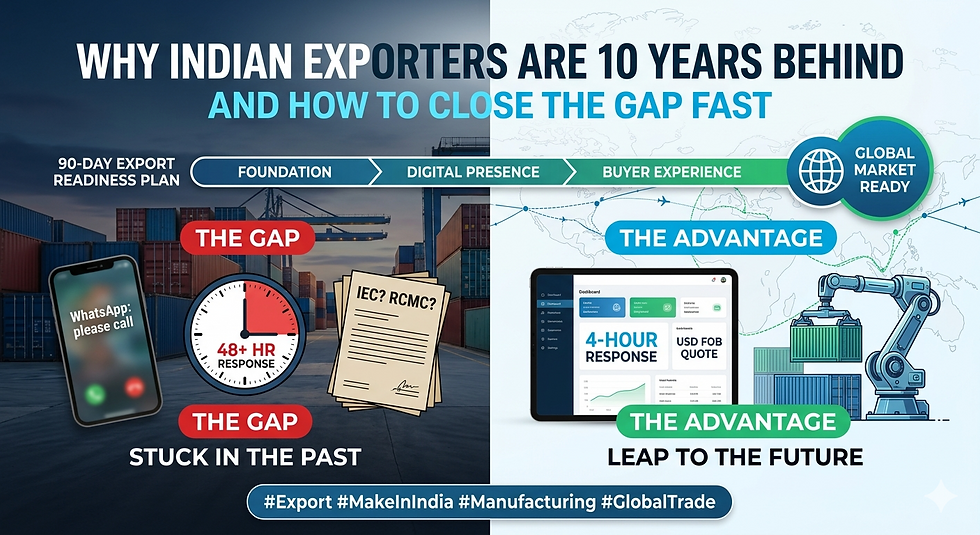
GAP #1: RESPONSE TIME AND COMMUNICATION PROFESSIONALISM
When I sent an inquiry to a Chinese supplier on Alibaba...
I typically received a response within four to eight hours. Often within two hours.
The response addressed my specific questions,
included relevant specifications, and offered clear next steps.
When I sent similar inquiries to Indian suppliers — through IndiaMART, TradeIndia, or direct contact — the response patterns were dramatically different.
Some never responded. Not a delay — no response at all.
Some responded two to three days later with a message that ignored half the questions I'd asked.
Some sent a WhatsApp message saying "please call" without any written information — expecting a buyer in a different time zone to initiate a phone call at an undefined time.
A small number responded quickly and professionally. These were the ones I moved forward with.
Here is the reality of international B2B buying:
Buyers are evaluating multiple suppliers simultaneously.
Their decision to continue pursuing a supplier or move on happens within the first one to two interactions.
A slow, incomplete, or unclear initial response ends most conversations before they begin.
The buyer doesn't tell you they've moved on. They just stop responding. You never know you lost an opportunity that was genuinely available.
Chinese suppliers learned this lesson at scale during the 2000s and 2010s. Many Indian manufacturers are still making the same mistakes.
━━━━━━━━━━━━━━━━━━━━━━━━━━━━━━━━━━━━━━━━━
GAP #2: EXPORT DOCUMENTATION READINESS
This gap costs more real business than any other — because it surfaces late in the buyer relationship, after trust has been built and intent is genuine.
A buyer has evaluated your products.
Quality is acceptable.
Price is competitive.
They want to place a trial order.
Then they ask:
"Can you provide a commercial invoice in our required format?
Do you have an IEC?
What's your RCMC?
Can you manage export customs clearance?
Do you have experience with [their country's] import compliance requirements?"
For a buyer importing into Europe, the US, or the Middle East, these are not optional questions. They are legal requirements that determine whether the goods can enter their country at all.
Many Indian manufacturers who are excellent at manufacturing are genuinely unprepared for this moment. They have products. They don't have export infrastructure.
IEC (Import Export Code) — the basic requirement for any Indian export — is not universally obtained by manufacturers who could be exporting.
RCMC (Registration cum Membership Certificate) from the relevant Export Promotion Council — required for export benefits and often expected by serious buyers — is similarly absent for many manufacturers.
Documentation formats — commercial invoice, packing list, certificate of origin, phytosanitary certificates for applicable products — are unfamiliar territory.
Country-specific compliance — CE marking for Europe, FDA registration for the US, ESMA for UAE — is completely unknown to most manufacturers who haven't specifically researched their target markets.
A buyer who reaches the documentation conversation and finds a supplier unprepared will often abandon the relationship — not because they don't want to buy, but because the complexity of educating and hand-holding a new exporter through documentation is not something most buyers have budget for.
They move to a supplier who already knows the process.
━━━━━━━━━━━━━━━━━━━━━━━━━━━━━━━━━━━━━━━━━
GAP #3: PRICING TRANSPARENCY AND INTERNATIONAL FORMAT
International buyers think in Incoterms. FOB. CIF. EXW. DDP.
These are internationally standardized trade terms that define who bears responsibility and cost for each stage of the shipping process.
When a buyer asks for an FOB price, they mean the cost of goods loaded onto a vessel at the Indian port, with all export clearance completed. This is a specific, standardized meaning.
When I sent RFQs to Indian suppliers and asked for FOB pricing, a significant number responded with a price that was actually their factory gate price — with no export documentation, no inland freight, no port handling, no customs clearance.
This is not FOB. Calling it FOB creates confusion and erodes trust when the buyer calculates landed cost and discovers the price doesn't include what they expected.
Worse: some suppliers quoted prices in different formats within the same quotation — some items in rupees, some in dollars, some at factory gate, some at port — creating a quotation that was effectively unreadable to an international buyer trying to compare multiple suppliers.
International buyers are professional. They deal with suppliers globally. A quotation that doesn't follow standard international format signals inexperience — and inexperienced exporters are higher risk for buyers than experienced ones.
Proper export quotation format: currency clearly specified (USD preferred for most markets), Incoterm clearly stated, validity period noted, payment terms specified, lead time from order confirmation, minimum order quantity, and packaging details.
One page. Completely unambiguous. Easy to compare against competing quotes.
Most Indian manufacturers have never seen this format — because they've never had to produce it.
━━━━━━━━━━━━━━━━━━━━━━━━━━━━━━━━━━━━━━━━━
GAP #4: DIGITAL EXPORT PRESENCE
How does an international buyer find Indian suppliers?
Some use IndiaMART or TradeIndia. More use Alibaba — where Indian supplier presence is thin compared to Chinese and Southeast Asian suppliers. Some search Google directly for "[product] manufacturer India."
What they find when they search Google for Indian manufacturers is often remarkably poor.
Websites that haven't been updated in years.
No English language content despite targeting international buyers.
No export capability information.
No certifications visible.
No case studies or client references.
Contact forms that don't work or email addresses that bounce.
Compare this to Chinese manufacturers on Alibaba or their own websites:
professional photography,
detailed product specifications in English,
certifications prominently displayed,
response time guarantees,
verified trade history,
video factory tours.
The Chinese supplier experience has been deliberately engineered to reduce buyer uncertainty. Every element of their digital presence answers the question a buyer has before they ask it.
Indian manufacturers with strong products and genuine export capability are losing to Chinese suppliers with average products and superior digital presentation — because buyers never get far enough to discover the product quality.
Digital presence for export is not about aesthetics. It is about removing uncertainty from the buyer's decision process. Every piece of information that answers a buyer's question before they have to ask it reduces friction and increases conversion.
━━━━━━━━━━━━━━━━━━━━━━━━━━━━━━━━━━━━━━━━━
GAP #5: SAMPLE MANAGEMENT AND BUYER EXPERIENCE
The sample process is where many potentially strong export relationships die quietly.
A serious international buyer will request samples before committing to an order. This is standard.
The sample experience —
how quickly samples arrive,
how well they're packaged,
what documentation accompanies them,
how you follow up
communicates everything about what the actual business relationship will look like.
Common Indian manufacturer sample process:
buyer requests sample,
manufacturer asks buyer to pay for sample cost and shipping,
weeks pass while this is negotiated,
sample eventually ships via generic courier with minimal documentation,
no follow-up from manufacturer after dispatch.
Facts
The buyer receives the sample.
If it's good, they have no information to move forward
no updated quotation,
no export documentation checklist,
no clear next steps.
They have to chase the supplier for information that should have been proactively provided.
Compare to the Chinese supplier sample process that has become standard:
free samples for qualified buyers,
shipped within five to seven business days,
professionally packaged with product specification sheets and a quotation package inside the box,
followed up with a WhatsApp message three days after estimated delivery: "I hope the samples arrived safely. I've attached our updated quotation and compliance documentation. Happy to schedule a call to discuss."
The sample package is a sales presentation. Most Indian manufacturers treat it as a logistics task.
━━━━━━━━━━━━━━━━━━━━━━━━━━━━━━━━━━━━━━━━━
THE ACTUAL OPPORTUNITY BEHIND THESE GAPS
I've spent this article describing problems. But the reason these problems matter is the scale of opportunity behind them.
India's export potential is genuinely enormous — and increasingly being recognized globally.
China plus one strategy: global buyers actively diversifying supply chains away from sole China dependence are looking for Indian manufacturers. This is not hypothetical — it is happening across multiple categories.
Government export incentives: PLI schemes, RoDTEP, export promotion council support, trade agreement benefits under developing FTAs — the financial incentives for Indian manufacturers to export have rarely been stronger.
Quality competitive advantage: In many categories — pharmaceuticals, textiles, engineering goods, food processing, handicrafts, chemicals — Indian manufacturers offer genuine quality advantages over lower-cost alternatives.
Price competitiveness: Indian manufacturing costs have remained competitive against established exporters in many categories.
The demand exists. The incentives exist. The quality exists. What's missing is the export infrastructure and buyer experience sophistication to convert interest into orders.
The manufacturers who close these five gaps — communication, documentation, pricing format, digital presence, sample management — are not just improving their export performance. They're accessing an opportunity that most Indian manufacturers are leaving completely untouched.
━━━━━━━━━━━━━━━━━━━━━━━━━━━━━━━━━━━━━━━━━
HOW TO CLOSE THE GAP: THE 90-DAY EXPORT READINESS PLAN
This is not a five-year transformation. The foundational gaps can be closed in 90 days with focused effort.
Days 1-30: Documentation Foundation
☐ Obtain IEC if not already held (online application, typically 2-3 days)
☐ Register with relevant Export Promotion Council for your category
☐ Create standard export documentation templates: commercial invoice, packing list, certificate of origin request process
☐ Research compliance requirements for your two to three target markets
☐ Create a standard export quotation template in international format (USD, Incoterms, all required fields)
Days 31-60: Digital Presence
☐ Create or update English language website with export focus: product specifications, certifications, export capability, contact information
☐ Create or optimize Alibaba profile with professional photography and complete product information
☐ Set up dedicated export inquiry email with four-hour response commitment during business hours
☐ Create a one-page company export profile document (factory overview, certifications, categories, countries supplied, MOQ, lead times)
Days 61-90: Buyer Experience
☐ Define your sample policy: which buyers qualify for free samples, what documentation accompanies samples, shipping timeline commitment
☐ Create a sample follow-up sequence: post-dispatch message, post-estimated-delivery follow-up, quotation package ready to send
☐ Train or designate one person as export inquiry owner with authority to respond and commitment to response time
☐ Test your entire buyer experience: send yourself an inquiry, go through the process end-to-end, identify every friction point
After 90 days, you have export infrastructure that most Indian competitors don't have. You are not ten years behind anymore.
━━━━━━━━━━━━━━━━━━━━━━━━━━━━━━━━━━━━━━━━━
THE UNCOMFORTABLE COMPARISON
Chinese manufacturers didn't develop superior export infrastructure because they're smarter or more capable.
They developed it because they were forced to by competition — and because they had the humility to study what international buyers actually wanted, then systematically build it.
Indian manufacturers have products that global buyers genuinely want. The quality is often excellent. The price is competitive. The category depth is significant.
What's missing is the willingness to look honestly at the buyer experience — to ask "what does an international buyer actually encounter when they try to buy from us?" — and close the gaps that answer reveals.
That willingness, applied with discipline over 90 days, closes a gap that has taken competitors years to build.
The window is open. The demand is real. The infrastructure is buildable.
The only question is whether you start before your competitor does.
Are you currently exporting or exploring it? What's been your biggest challenge with international buyers? Drop it in comments — genuinely curious what others are experiencing.
Comments