

THE D2C TRAP: WHY INDIAN MANUFACTURERS ARE BUILDING WEBSITES NOBODY VISITS

THE D2C TRAP: WHY INDIAN MANUFACTURERS ARE BUILDING WEBSITES NOBODY VISITS
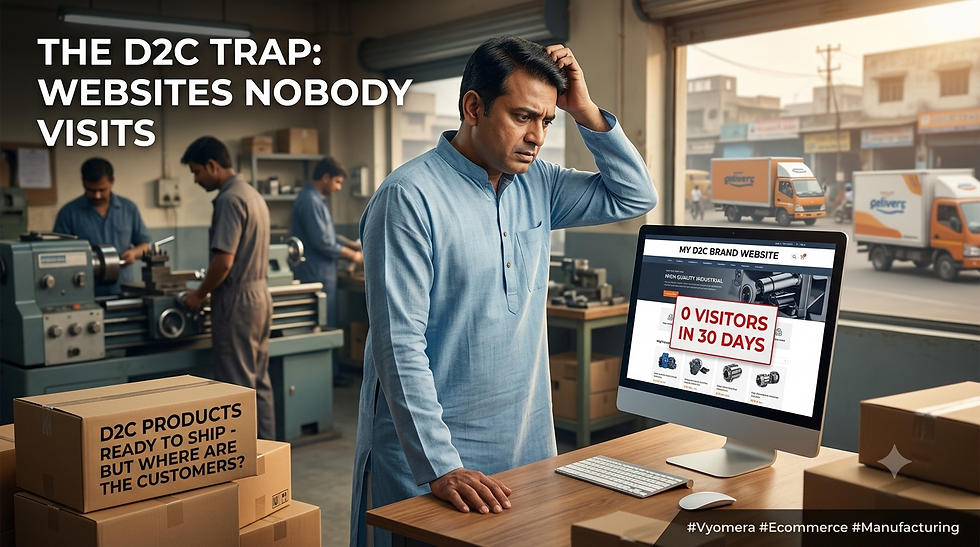
Everyone is telling Indian manufacturers to go D2C. Build your own website. Own your customer. Cut out the middleman. Keep the margins. Control your brand. The advice sounds compelling. The logic is clean. The vision is attractive.
So manufacturers invest. They spend ₹30,000-80,000 on a website. They get it built. They launch it. They share it on WhatsApp with their network.
And then nothing happens.
A few hundred visitors in the first month — mostly family, friends, and curious people from their network. Almost zero orders. The website sits there, professional and silent, generating no revenue.
Six months later they conclude: "D2C doesn't work for us." The conclusion is wrong. The diagnosis is right. The website isn't the problem. The traffic problem nobody warned them about is.
━━━━━━━━━━━━━━━━━━━━━━━━━━━━━━━━━━━━━━━━━
THE FUNDAMENTAL TRUTH ABOUT WEBSITES
A website is not a sales channel. A website is a destination. This distinction sounds simple. Its implications are enormous and consistently misunderstood.
Amazon is a sales channel. Millions of buyers come to Amazon every day looking for products to purchase. When you list on Amazon, you are placing your product in front of buyers who are already there, already intending to buy, already searchi1ng for what you sell.
Your website has none of this. It is an empty destination that nobody knows exists until someone sends them there.
Every visitor to your website had to be deliberately sent — through advertising, through search engine results, through a social media post, through a recommendation. Traffic does not arrive organically simply because a website exists.
This is the reality manufacturers discover six months after launch. Not that their website is bad. Not that their products aren't good enough for D2C. But that building a website without a traffic strategy is building a store in a location nobody passes.
━━━━━━━━━━━━━━━━━━━━━━━━━━━━━━━━━━━━━━━━━
THE REAL COST OF D2C TRAFFIC
When manufacturers understand the traffic problem, the next question is: how do we get traffic? The honest answer is that meaningful D2C traffic is expensive, slow, or both.
Paid advertising (Google Shopping, Meta ads):
This is the fastest path to website traffic. Also the most expensive. To generate consistent D2C sales through paid advertising, you need:
A Customer Acquisition Cost (CAC) that is lower than your product margin.
If your product sells for ₹2,000 with ₹800 margin, and Google Shopping costs ₹600 per converted customer, your net margin per D2C sale is ₹200. That's before website maintenance, payment gateway fees, and logistics.
Compare: the same product on Amazon at 15% referral fee costs ₹300 in platform fees. No advertising cost if ranking organically. Better margin than paid D2C.
For most manufactured goods with margins under 40-50%, paid advertising to a brand website produces worse economics than selling on marketplaces. Not slightly worse. Significantly worse.
SEO (organic search traffic):
Search engine optimization — getting your website to appear in Google search results — is the sustainable long-term path to free traffic.
It takes 12-24 months of consistent content creation, technical optimization, and link building before most new websites see meaningful organic search traffic.
For a manufacturer who needs revenue in the next six months, SEO is not a traffic strategy. It is a long-term asset building activity that requires a separate plan for near-term revenue.
Social media:
Building a social media following large enough to drive meaningful D2C sales requires consistent content creation over months or years — and even large followings convert to website sales at rates of 0.5-2%.
A manufacturer with 10,000 Instagram followers posting regularly might drive 50-200 website visits per post. At a 2% conversion rate, that's one to four sales per post.
This is not a D2C business. It's a supplementary channel that might help — once the following exists. Building the following is a separate, long-term project.
━━━━━━━━━━━━━━━━━━━━━━━━━━━━━━━━━━━━━━━━━
THE COMPARISON NOBODY MAKES HONESTLY
Here is the economic comparison that every manufacturer should see before deciding how to prioritize website versus marketplace:
Scenario: Manufacturer with ₹1,000 product, ₹400 production cost, ₹600 gross margin
Amazon channel:
Platform fee: ₹150 (15%)
FBA fulfillment: ₹80
Advertising (if needed): ₹60
Net margin per sale: ₹310
Traffic required: None — Amazon brings buyers to you
Time to first sale: Days to weeks after listing
Brand website (paid traffic):
Payment gateway: ₹25
Shipping: ₹80
Packaging premium: ₹20
Google/Meta advertising: ₹200-400 per converted customer (realistic for most categories)
Net margin per sale: ₹75-275 (highly variable, often negative at early stage)
Traffic required: Must be purchased or earned
Time to consistent sales: 6-18 months minimum
Brand website (organic traffic, 12+ months later):
Payment gateway: ₹25
Shipping: ₹80
Packaging premium: ₹20
Advertising: ₹0 (organic)
Net margin per sale: ₹475
Traffic required: Must have been built over 12+ months
Time to consistent sales: 12-24 months from launch
The long-term D2C economics are excellent — IF you build the organic traffic asset. The short and medium term D2C economics are often worse than marketplace.
This is the honest picture. D2C is a long-term margin optimization play, not a short-term revenue strategy.
━━━━━━━━━━━━━━━━━━━━━━━━━━━━━━━━━━━━━━━━━
SO WHAT IS A WEBSITE ACTUALLY GOOD FOR?
Given everything above, the obvious question is: should manufacturers bother with a website at all?
Yes — emphatically. But for different reasons than most manufacturers build one.
Reason 1: Credibility infrastructure for B2B buyers
When a B2B buyer evaluates you as a potential supplier — whether you found them through LinkedIn, IndiaMART, a trade show, or a referral — the first thing they do is Google your company.
What they find determines whether they continue the conversation.
A professional website that clearly explains your products, manufacturing capability, certifications, and experience removes doubt. It answers the question "is this a real, established business?" before the buyer has to ask.
For B2B sales, a website is not a sales channel. It is a credibility verification tool. And it works even if it generates zero direct traffic or sales.
Reason 2: Anchor for all other digital activity
Your LinkedIn profile links somewhere.
Your Instagram bio has a link.
Your email signature has a URL.
Your IndiaMART profile references a website.
Your Google Business Profile connects to one.
Without a website, all of these touchpoints lead nowhere. With a website, every digital interaction you have potentially drives a visitor somewhere that explains your business in full.
The website is the hub that makes every other digital presence more effective.
Reason 3: Amazon brand store alternative for brand storytelling
Amazon allows brand stores — dedicated pages within Amazon where you tell your brand story, showcase your full product range, and create a curated shopping experience.
A well-built brand website serves the same function for customers who find you outside Amazon — through press coverage, social media, word of mouth, or direct recommendation. It gives them somewhere to understand your brand completely before they go to Amazon to purchase.
Reason 4: Long-term D2C asset building
If you commit to building organic traffic through consistent SEO and content over 18-24 months, the website eventually becomes a high-margin direct sales channel.
This is a real and worthwhile goal. It just needs to be understood as an 18-24 month investment, not a six-month revenue play.
━━━━━━━━━━━━━━━━━━━━━━━━━━━━━━━━━━━━━━━━━
THE MANUFACTURERS WHO ARE DOING D2C RIGHT
The Indian manufacturers building successful D2C businesses — generating real revenue through their own websites — share specific characteristics.
They started with marketplaces first. Amazon and Flipkart gave them product-market validation, initial reviews, customer feedback, and brand recognition before they invested seriously in D2C. They used marketplace success to fund and inform website strategy.
They have products with strong repeat purchase potential. D2C economics work best when customers buy again — supplements, consumables, skincare, food products, apparel with loyal customers. One-time purchase products with no repeat purchase dynamic make customer acquisition costs very difficult to justify.
They invest in content seriously. Their websites have genuine helpful content — guides, how-to articles, comparison tools — that attracts organic search traffic over time. This content investment started 12-18 months before it produced meaningful traffic.
They treat D2C as a complementary channel, not a replacement. They still sell on Amazon. They still use B2B distribution. The website is one channel in a multi-channel strategy, not the channel.
They measure CAC honestly. They know exactly what it costs to acquire a website customer, compare it to marketplace economics, and only scale D2C spend when the numbers justify it.
━━━━━━━━━━━━━━━━━━━━━━━━━━━━━━━━━━━━━━━━━
THE RIGHT SEQUENCE FOR MOST MANUFACTURERS
Based on everything above, here is the sequence that makes practical sense for most manufacturers:
Stage 1: Marketplace first (Months 1-6)
Launch on Amazon and Flipkart.
Build reviews.
Validate product-market fit.
Generate revenue.
Learn what customers actually want from real purchase and review data.
Do not invest significantly in website traffic at this stage. Build the website for credibility — three to five pages, professional, complete — but do not expect it to generate revenue.
Stage 2: B2B digital presence (Months 3-9 parallel)
Optimize IndiaMART.
Build LinkedIn presence.
Use the website as credibility anchor for B2B conversations.
Generate B2B leads and revenue alongside marketplace growth.
Stage 3: Content foundation (Months 6-12)
Begin consistent content creation targeting search terms your customers use.
Product guides.
Buying guides.
Comparison content.
How-to articles.
This builds organic traffic slowly — but the compounding starts here.
Stage 4: D2C channel development (Months 12-24)
By this point you have: product-market validation from marketplace,
customer insight from reviews
some organic traffic building, and
revenue to fund customer acquisition testing.
Now evaluate paid D2C carefully:
test small budgets,
measure CAC honestly,
scale only what is profitable.
Stage 5: D2C as primary channel (Year 3+)
For manufacturers who execute stages 1-4 well, the website eventually becomes a genuinely valuable direct channel with strong margins and owned customer relationships.
This is the D2C opportunity. It is real. The timeline is just longer than most people suggest.
━━━━━━━━━━━━━━━━━━━━━━━━━━━━━━━━━━━━━━━━━
THE ADVICE WORTH IGNORING
"Just build a Shopify store and run Facebook ads."
This advice has created thousands of manufacturers who...
spent ₹50,000 on website development and
₹30,000 on Meta ads,
generated 200 visitors and three orders,
and concluded that D2C doesn't work.
D2C works. The advice to start with a website and paid ads before establishing product-market fit, building reviews, and developing a sustainable traffic strategy does not work for most manufacturers.
Build the website. Absolutely.
But build it for the right reasons —
Credibility,
B2B anchoring,
Long-term organic asset — not because you expect it to replace marketplace revenue in year one.
The manufacturers who understand this sequence build sustainable multi-channel businesses.
The ones who follow the "just go D2C" advice without understanding the traffic economics spend money, get disappointed, and miss the marketplace opportunity while they're waiting for website traffic that never comes.
Have you built a website for your manufacturing business? What results did you actually see versus what you expected? Drop it in comments — genuinely curious what others experienced.
Comments