

"How Indian Manufacturers Are Losing the Online Battle Before It Even Starts"

HOW INDIAN MANUFACTURERS ARE LOSING THE ONLINE BATTLE BEFORE IT EVEN STARTS
The conversation happens more often than I can count.
I'm sitting across from a manufacturer...
Good products.
Established business.
Decent margins And I ask: "Are you selling online?"
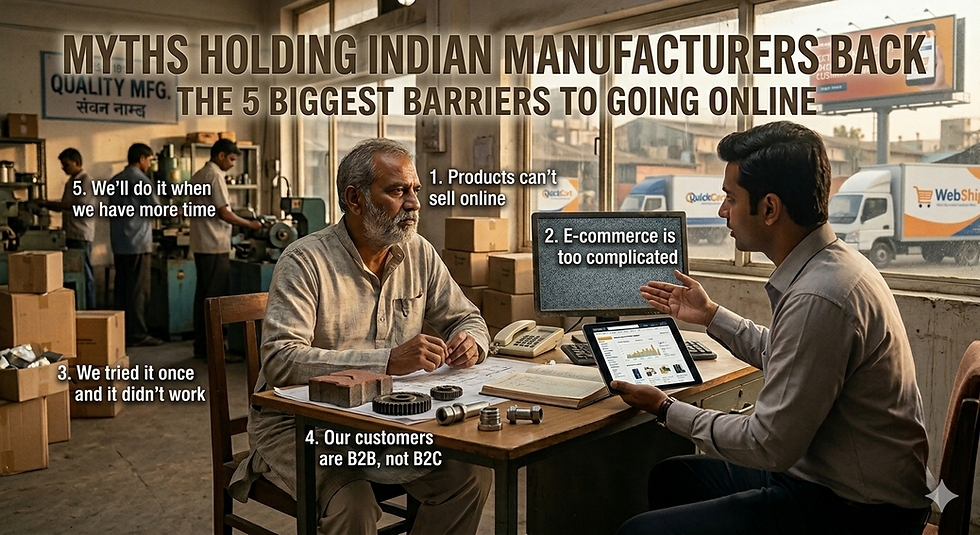
The answer is almost always one of five things.
"Our products don't sell online."
"E-commerce is too complicated for us."
"We tried it once and it didn't work."
"Our customers are B2B, not B2C."
"We'll do it when we have more time."
Every single one of these is either a myth, a misdiagnosis, or a postponement that compounds into permanent disadvantage.
I've heard these five responses from manufacturers making ₹50 lakh annually and manufacturers making ₹50 crore annually. The revenue level doesn't matter. The mental barrier is the same.
And while these conversations are happening, their competitors are...
building online presence
accumulating reviews
establishing search rankings, and
creating customer relationships that will be nearly impossible to displace in three to five years.
The online battle for Indian manufacturing is not coming. It is already happening. The question is whether you're in it.
━━━━━━━━━━━━━━━━━━━━━━━━━━━━━━━━━━━━━━━━━
MYTH #1: "OUR PRODUCTS DON'T SELL ONLINE"
This is the most common response. And it is almost always wrong.
I understand why manufacturers believe it. They make industrial components, construction materials, bulk commodities, B2B supplies. These don't feel like "online products." They feel like things you buy through distributors, trade shows, and personal relationships.
But here's what I've consistently found when I actually search: almost every physical product category has buyers searching online...
Paver blocks
Industrial fasteners
Packaging materials
Safety equipment
Agricultural inputs
Rehabilitation equipment
Commercial kitchen supplies.
Search any of these on Amazon India, Flipkart, or even Google...
You will find listings.
You will find reviews.
You will find customers buying.
The question is not whether your product category has online buyers. The question is whether those online buyers are finding you — or finding your competitor who made a different assumption about what "sells online."
We sold rehabilitation equipment. Wheelchairs. Pedal exercisers. Massage chairs. Products that feel inherently clinical, B2B, institutional.
Within six months of proper online setup, individual homeowners, family caregivers, and small clinics were placing orders directly. Customer segments we had never reached through traditional
B2B channels. Revenue that would not have existed without going online.
The products didn't change. The channel changed.
━━━━━━━━━━━━━━━━━━━━━━━━━━━━━━━━━━━━━━━━━
MYTH #2: "E-COMMERCE IS TOO COMPLICATED"
This was true in 2012. It is not true in 2026.
Setting up a basic Amazon seller account takes one day.
Creating a basic Flipkart presence takes another day.
Getting your first product listed — with a reasonable listing — takes a week if you're thorough.
Is there complexity? Yes...
Brand Registry
GTIN requirements
Category approvals
Compliance documentation for certain product types
FBA setup
Advertising.
But "complexity" is not the same as "too complicated for us."
Every new operational process has complexity...
When manufacturers set up a new production line
Manage import documentation, or
Implement an ERP system — those are complex
They do them anyway because the business benefit justifies the learning curve.
The real question is not whether e-commerce is complicated. It's whether the revenue opportunity justifies learning the complexity.
For most manufacturers I've worked with, the answer is obviously yes — once they actually see the numbers.
One manufacturer I helped launch on Amazon had resisted for three years because the platform "seemed complicated." The setup took four weeks. By month three, online revenue had reached ₹4.2 lakh monthly. By month six, it was ₹8.5 lakh.
Three years of delayed revenue because the complexity felt insurmountable.
It wasn't. It just required someone to start.
━━━━━━━━━━━━━━━━━━━━━━━━━━━━━━━━━━━━━━━━━
MYTH #3: "WE TRIED IT ONCE AND IT DIDN'T WORK"
This one deserves the most careful response because it contains a real experience — just the wrong conclusion.
When manufacturers say "we tried it and it didn't work," what usually happened was one of three things:
They created a basic seller account, uploaded a minimal listing with mediocre photos and a generic title, ran no advertising, got no traction, and concluded that e-commerce doesn't work for their products.
Or they hired an agency that charged ₹30-50k per month, delivered generic work, produced no meaningful results, and the manufacturer concluded the platform doesn't work.
Or they launched during a period when their product category was heavily competitive, didn't invest in the fundamentals of ranking and reviews, and got lost in search results.
None of these is e-commerce not working. All of these are e-commerce done incorrectly.
The platform works. The evidence is the millions of Indian sellers generating real revenue on Amazon and Flipkart every month.
What doesn't work is a half-built presence treated as an experiment rather than a channel.
Online retail rewards commitment and competence. It punishes incomplete effort with invisibility.
"We tried it and it didn't work" usually means "we tried it insufficiently and got insufficient results." That's a very different problem — and a solvable one.
━━━━━━━━━━━━━━━━━━━━━━━━━━━━━━━━━━━━━━━━━
MYTH #4: "OUR CUSTOMERS ARE B2B, NOT B2C"
This is the barrier I find hardest to challenge — because it contains the most truth.
If you supply industrial machinery to factories, yes, you are genuinely B2B and Amazon is genuinely not your primary channel.
But most manufacturers who say this are not in that situation.
Most manufacturers saying "our customers are B2B" are making products that end up in homes, offices, small businesses, clinics, shops, and restaurants — via distributors and retailers who sit between the manufacturer and the end user.
The distributor model exists because manufacturers historically had no way to reach end users directly. E-commerce has changed this.
Going online does not mean abandoning your B2B channel. It means adding a parallel direct channel that gives you:
→ Better margins (no distributor cut)
→ Direct customer feedback (what problems are buyers actually having)
→ Brand visibility (customers see your brand, not just your distributor's shelf)
→ Channel leverage (your distributor knows you have alternatives)
The manufacturers who understand this are using online presence to strengthen their B2B position, not abandon it. They're walking into distributor negotiations with data from their own direct sales. They're using customer reviews to demonstrate demand. They're building brand recognition that makes their products easier for distributors to sell.
B2B and online are not opposites. The best manufacturers are doing both.
━━━━━━━━━━━━━━━━━━━━━━━━━━━━━━━━━━━━━━━━━
MYTH #5: "WE'LL DO IT WHEN WE HAVE MORE TIME"
This is the most dangerous response of all — because it feels responsible.
You're prioritizing existing operations. Managing current customers. Running the business that's already generating revenue. Going online can wait until things are less busy.
Here's the problem: it is never less busy.
Manufacturing businesses are operationally intense. There is always...
a production issue
a delivery problem
a supplier delay
a staff challenge.
The business demands attention constantly.
"When we have more time" is not a date. It's a permanent postponement dressed as a reasonable plan.
Meanwhile, the competitor who found the time — even imperfectly, even partially —
is three months ahead of you on review accumulation
six months ahead on search ranking
twelve months ahead on brand recognition.
These advantages compound. An Amazon listing with 200 reviews and a 4.4-star rating is not twice as good as a listing with 100 reviews. It is five times more trusted by new customers.
The time gap becomes harder to close the longer you wait.
The manufacturers losing the online battle are not losing to better products. They are losing to competitors who started earlier — who found imperfect time, built imperfect initial listings, learned from early mistakes, and compounded their advantage month by month.
━━━━━━━━━━━━━━━━━━━━━━━━━━━━━━━━━━━━━━━━━
THE REAL COST OF DELAY
I want to be specific about what delay actually costs — not in abstract terms, but in numbers.
A manufacturer who launches on Amazon today and builds to ₹5 lakh monthly revenue in 12 months will earn approximately ₹30-35 lakh in that first year (accounting for ramp-up time).
A manufacturer who delays six months and achieves the same trajectory will earn approximately ₹15-18 lakh in the same calendar year.
The six-month delay costs ₹12-17 lakh in revenue. Not because the market changed. Not because the product changed. Because the decision was delayed.
Multiply this across two years, three years — as competitors build reviews and rankings that become structural advantages — and the cost of "we'll do it later" is not just delayed revenue. It's a permanently harder competitive position.
━━━━━━━━━━━━━━━━━━━━━━━━━━━━━━━━━━━━━━━━━
WHAT ACTUALLY HOLDS MANUFACTURERS BACK
After enough conversations, I've stopped believing that the five responses I listed at the beginning are the real barrier.
They're rationalizations. Reasonable-sounding explanations for a decision that was already made.
The actual barrier is almost always one of three things:
Fear of the unknown.
E-commerce is genuinely unfamiliar.
It has its own language, its own rules, its own failure modes.
Starting something unfamiliar feels risky.
Absence of a clear starting point. "Going online" is overwhelming as a concept. Nobody knows which step to take first, so they take none.
No one to lead it internally. Someone has to own this. If no one on the team has the knowledge or the mandate to build the online channel, it doesn't get built.
These are all solvable. Fear diminishes with information. The starting point is just one decision — pick one platform, list one product. Internal ownership is a hiring or assignment decision.
The manufacturers who are winning online didn't have a special advantage. They just solved one of these three barriers and started.
Starting imperfectly is worth infinitely more than planning perfectly while competitors execute.
Which of these five myths do you hear most often — or believed yourself at some point? Drop it in the comments.
Comments